NeuroSuit Therapy
Supporting alignment, body awareness, strength and functional movement through specialist paediatric physiotherapy.
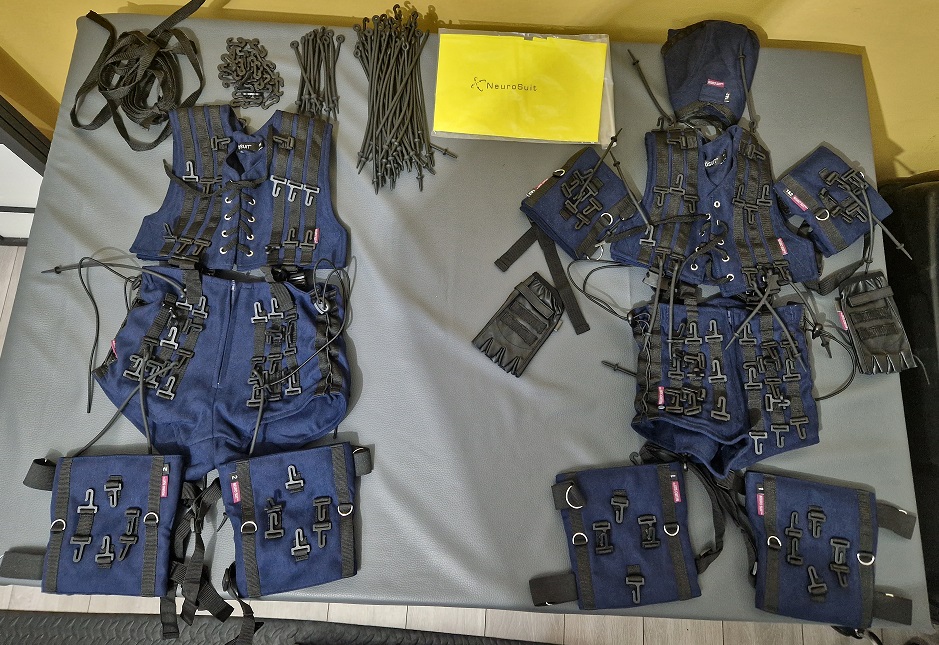
At Children’s Physio Dorset, we offer access to the NeuroSuit within clinic appointments and bespoke intensive therapy programmes for children with neurological and developmental needs.
This specialist piece of equipment can be used to support postural control, alignment, body awareness and functional movement. It is always incorporated into an individually tailored physiotherapy programme and used only where clinically appropriate.
The NeuroSuit is not a treatment in isolation. Children remain active throughout the session, completing purposeful exercises and functional activities based on their individual abilities and goals.
What Is the NeuroSuit?
The NeuroSuit is a dynamic therapeutic suit made up of several components, including a vest, shorts and adjustable elastic cords. Knee supports, shoe attachments and other components may also be used depending on the child and the activities being practised.
The elastic cords can be adjusted to provide carefully directed support, resistance and proprioceptive feedback across the body. This can help children become more aware of their posture and positioning while actively practising movement.
The suit does not rigidly hold a child in place or prevent movement. Instead, it is adjusted to provide the level and direction of support most appropriate for the child’s presentation and goals.
Potential Benefits of NeuroSuit Therapy
When combined with active physiotherapy, the NeuroSuit may be used to support:
- Head and trunk control
- Postural alignment and midline orientation
- Core and proximal stability
- Muscle activation and endurance
- Balance and coordination
- Standing and weight-bearing
- Walking and gait practice
- Functional movement patterns
- Body awareness and proprioception
- Sensory regulation through deep-pressure and proprioceptive input
- Confidence during movement
How Is the NeuroSuit Used?
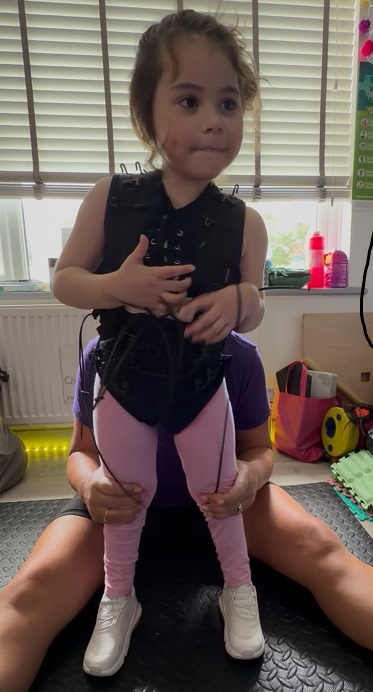
The NeuroSuit is carefully fitted and adjusted before the child begins active physiotherapy. Sessions are always tailored to the child, and the level of support or resistance can be changed throughout treatment.
Activities may include:
- Core and balance work
- Sitting and postural control
- Kneeling and transitional movements
- Standing and walking activities
- Strengthening exercises
- Functional play
- Reaching and upper-limb activities
- Dynamic Movement Intervention (DMI)
- Gait retraining
- Task-specific practice linked to the child’s goals
The NeuroSuit may also be combined with other specialist approaches such as electrical stimulation, TASES, spinal stimulation, whole body vibration or hydrotherapy where clinically appropriate.
NeuroSuit and Dynamic Movement Intervention
Where appropriate, NeuroSuit therapy may be combined with Dynamic Movement Intervention (DMI).
The NeuroSuit can provide additional alignment, resistance and proprioceptive feedback while the child practises active movement. DMI can then be used to challenge postural responses, balance, strength and gross motor skills within the same individualised programme.
Not every child will require both approaches. Following assessment, Maggie will recommend the techniques most appropriate for your child’s presentation, tolerance and goals.
NeuroSuit Intensive Therapy
The NeuroSuit can be used within regular physiotherapy appointments but is particularly suited to bespoke intensive therapy programmes, where children have repeated opportunities to practise targeted movement skills over a concentrated period.
A NeuroSuit intensive may include:
- NeuroSuit therapy
- Dynamic Movement Intervention
- Strength and balance work
- Standing and gait practice
- Electrical stimulation or TASES
- Spinal stimulation
- Whole body vibration
- Hydrotherapy
- A tailored home exercise programme
Every intensive is planned around the child’s individual goals, stamina, tolerance and family availability.
Who May Benefit?
NeuroSuit therapy may be considered for children with difficulties affecting posture, strength, balance or functional movement, including children with:
- Cerebral palsy
- Developmental delay
- Low muscle tone
- Spinal muscular atrophy and other neuromuscular conditions
- Paediatric stroke
- Traumatic or acquired brain injury
- Genetic, chromosomal or metabolic conditions
- Spinal cord injury
- Reduced postural control
- Generalised weakness
- Walking or balance difficulties
Is It Right for My Child?
The NeuroSuit is not necessary or appropriate for every child and is not used routinely.
A physiotherapy assessment will be completed before it is offered. This allows us to consider your child’s medical history, movement abilities, tolerance and goals, and to identify any precautions or reasons why the suit may not be suitable.
Your child will be closely monitored throughout treatment, and the suit or activities can be adjusted at any time according to comfort and clinical response.
NeuroSuit Therapy at Children’s Physio Dorset
NeuroSuit therapy is clinically overseen by Maggie Dawson, Lead Specialist Paediatric Physiotherapist, who has over 18 years of paediatric physiotherapy experience and advanced training in neurological rehabilitation, Dynamic Movement Intervention, TASES, NMES and spinal stimulation.
Children’s Physio Dorset has its own NeuroSuit available for use within clinic appointments and tailor-made intensive therapy programmes.
Interested in Finding Out More?
If you would like to explore whether NeuroSuit therapy could support your child, please get in touch.
We would be happy to discuss your child’s needs and explain how the NeuroSuit could be incorporated into regular physiotherapy or a bespoke intensive therapy programme.